
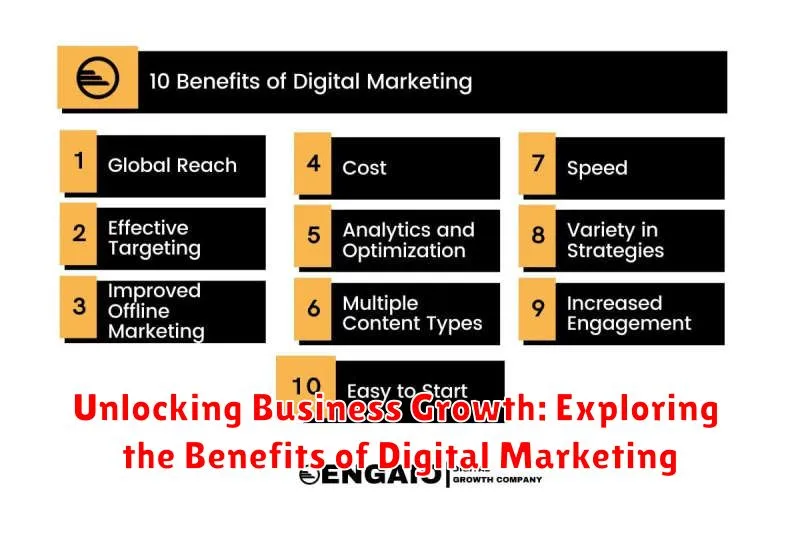
In today’s rapidly evolving digital landscape, digital marketing has become an indispensable tool for businesses of all sizes seeking to achieve sustainable growth. Unlocking business growth requires a strategic approach, and understanding the benefits of digital marketing is paramount to success. This article will explore the multifaceted advantages that digital marketing offers, from increased brand visibility and enhanced customer engagement to cost-effective advertising and precise targeting. By leveraging the power of digital marketing, businesses can effectively connect with their target audiences, drive conversions, and ultimately, unlock their full growth potential.
From established corporations to emerging startups, embracing digital marketing is no longer optional but rather a necessity for remaining competitive in the modern marketplace. This article delves into the core benefits of digital marketing, demonstrating how it empowers businesses to reach a wider audience, personalize customer experiences, and measure campaign effectiveness with unparalleled precision. By understanding the diverse strategies encompassed within digital marketing – including search engine optimization (SEO), social media marketing, email marketing, and pay-per-click (PPC) advertising – businesses can strategically allocate resources and unlock unprecedented growth opportunities. We will examine these strategies and their impact on business growth, providing valuable insights for organizations looking to thrive in the digital age.
Understanding the Scope of Digital Marketing
Digital marketing encompasses a broad range of online activities aimed at promoting brands, products, and services. It leverages various digital channels to connect with target audiences where they spend their time online.
Key components of digital marketing include search engine optimization (SEO), search engine marketing (SEM), social media marketing, email marketing, content marketing, and influencer marketing. These strategies work together to create a comprehensive online presence.
SEO focuses on optimizing website content to rank higher in search engine results pages (SERPs), driving organic traffic. SEM utilizes paid advertising to increase visibility on search engines. Social media marketing engages audiences on platforms like Facebook, Instagram, and Twitter. Email marketing nurtures leads and builds customer relationships through targeted email campaigns.
Content marketing provides valuable and engaging content to attract and retain customers. Influencer marketing collaborates with key individuals to reach wider audiences. Understanding the scope of these different facets is crucial for developing a successful digital marketing strategy.
Increased Brand Visibility and Reach
Digital marketing offers unparalleled opportunities to expand brand visibility and reach a wider audience. Unlike traditional marketing methods that often have geographical limitations, digital channels transcend boundaries, allowing businesses to connect with potential customers across the globe. This increased visibility translates into greater brand awareness and recognition.
Through search engine optimization (SEO), businesses can improve their organic search rankings, making it easier for potential customers to find them online. A strong SEO strategy ensures that a business’s website appears prominently in search results, driving organic traffic and increasing brand visibility.
Social media marketing plays a crucial role in expanding brand reach. By creating engaging content and leveraging social media platforms, businesses can connect with a vast audience, build brand communities, and amplify their message. Social media also provides opportunities for viral marketing, where content is shared organically by users, significantly increasing brand visibility and reach.
Utilizing various digital channels ensures businesses can engage with their target audience where they spend their time online, maximizing their reach and potential for conversions. This broader reach can lead to increased brand awareness and establish a business as a leader in its industry.
Targeted Audience Engagement
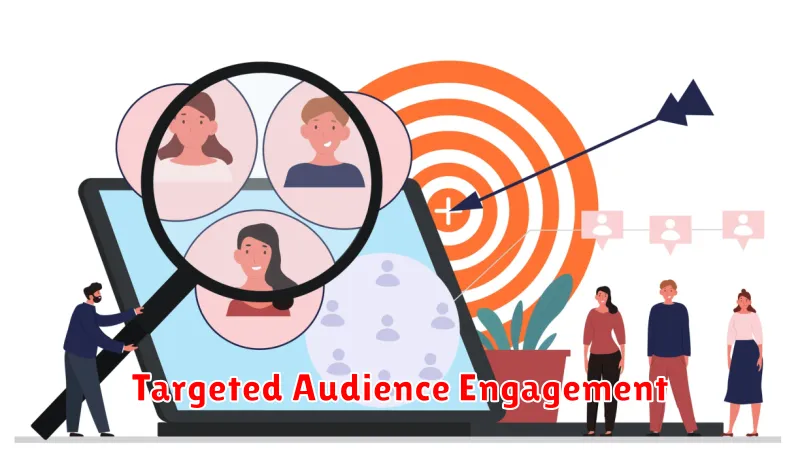
Digital marketing offers unparalleled opportunities for targeted audience engagement. Unlike traditional marketing methods that cast a wide net, digital channels allow businesses to precisely target specific demographics, interests, and behaviors. This precision targeting ensures that marketing messages reach the most receptive audience, maximizing impact and minimizing wasted resources.
Through data analytics and audience segmentation, businesses can identify key characteristics of their ideal customers. This data-driven approach enables the creation of highly personalized campaigns that resonate with specific audience segments. Whether it’s through social media advertising, email marketing, or search engine optimization, businesses can tailor their content and offers to meet the unique needs and preferences of their target audience.
This targeted approach fosters deeper engagement and builds stronger connections with potential customers. By delivering relevant and timely messages, businesses can nurture leads and guide them through the sales funnel more effectively.
Cost-Effective Marketing Solutions
Traditional marketing methods often involve substantial upfront investments and ongoing expenses. Digital marketing, in contrast, offers a range of cost-effective solutions suitable for businesses of all sizes. From leveraging organic social media strategies to running targeted online advertising campaigns, businesses can control their spending and maximize their return on investment.
Pay-per-click (PPC) advertising, for instance, allows businesses to only pay when a user actively clicks on their ad, ensuring that marketing budgets are used efficiently. Furthermore, the ability to precisely target specific demographics and interests through digital channels minimizes wasted ad spend on irrelevant audiences, leading to a higher return.
The accessibility of digital marketing tools and platforms also contributes to its cost-effectiveness. Many free or low-cost resources are available for businesses to manage their online presence, analyze data, and engage with their target market. This allows even small businesses with limited budgets to compete effectively in the digital landscape.
Measurable Results and Data-Driven Insights
One of the most significant advantages of digital marketing is its inherent measurability. Unlike traditional marketing methods, digital campaigns provide access to a wealth of data, allowing businesses to track performance in real-time and gain valuable insights into customer behavior.
With analytics tools, marketers can monitor key metrics such as website traffic, conversion rates, click-through rates, and engagement levels. This data-driven approach enables businesses to understand which strategies are working and which need adjustments. By analyzing campaign performance, marketers can optimize their efforts, allocate resources effectively, and maximize return on investment (ROI).
This data-driven decision making empowers businesses to refine their targeting, personalize messaging, and ultimately drive better results. The ability to measure and analyze campaign performance provides a level of transparency and accountability that is unmatched by traditional marketing approaches.
Improved Conversion Rates and ROI
Digital marketing offers a significant advantage in improving conversion rates and ultimately, return on investment (ROI). By leveraging data analytics and precise targeting, businesses can optimize campaigns to reach the most qualified leads. This focused approach minimizes wasted ad spend and maximizes the potential for conversions.
Conversion rate optimization (CRO) is a key component within digital marketing strategies. Through A/B testing, analyzing user behavior, and refining website design and content, businesses can streamline the customer journey toward desired actions, whether that be making a purchase, signing up for a newsletter, or requesting a quote.
The ability to track and measure results in real-time empowers businesses to constantly refine their strategies. By analyzing key performance indicators (KPIs) such as click-through rates, conversion rates, and cost per acquisition, marketers can identify what’s working and what’s not, leading to continuous improvement and a stronger ROI.
Enhanced Customer Engagement and Loyalty
Digital marketing offers unprecedented opportunities to cultivate stronger customer relationships and foster lasting loyalty. By leveraging various online platforms, businesses can interact with their customers on a more personal level, creating meaningful connections that translate into repeat business and positive brand advocacy.
Social media platforms, for example, allow for direct two-way communication. Businesses can respond to customer inquiries, address concerns, and participate in relevant conversations, demonstrating a genuine commitment to customer satisfaction. This interactive engagement builds trust and strengthens the customer-brand relationship.
Personalized email marketing campaigns are another powerful tool for nurturing customer loyalty. By tailoring content to individual customer preferences and purchase history, businesses can deliver relevant information and offers, increasing customer engagement and driving repeat purchases.
Loyalty programs, easily implemented through digital channels, provide further avenues for rewarding loyal customers with exclusive discounts, early access to new products, and other perks. These initiatives not only incentivize repeat business but also foster a sense of community and exclusivity, further solidifying customer loyalty.
Building a Strong Online Presence
In today’s digital age, a strong online presence is no longer optional—it’s essential for business success. It’s the foundation upon which you build brand awareness, attract customers, and ultimately, drive growth. A robust online presence helps establish your brand as a credible and trustworthy entity in the market.
This involves creating a cohesive brand experience across various online platforms. A well-designed website serves as your digital storefront, providing information about your products or services and facilitating customer interactions. Active social media profiles allow you to engage with your audience, build relationships, and share valuable content. Search engine optimization (SEO) ensures your business is easily discoverable by potential customers searching online.
Cultivating a strong online presence allows businesses to control their narrative and shape public perception. It’s an opportunity to showcase your brand’s values, personality, and unique selling propositions. By consistently delivering high-quality content and engaging with your audience, you can build trust and loyalty, converting casual visitors into loyal customers.
Staying Ahead of the Competition
In today’s dynamic business landscape, staying ahead of the competition is crucial for survival and growth. Digital marketing provides the tools and strategies necessary to achieve this. By leveraging digital channels effectively, businesses can gain a competitive edge and establish themselves as market leaders.
Competitive analysis is a key component of digital marketing. By understanding your competitors’ online presence, strategies, and target audience, you can identify opportunities to differentiate your brand and offer unique value propositions. Digital marketing allows for real-time monitoring of competitor activities, enabling businesses to adapt quickly to market changes and stay one step ahead.
Innovation is another crucial aspect of staying competitive. Digital marketing facilitates experimentation with new platforms, technologies, and content formats. This allows businesses to discover innovative ways to engage their target audience and deliver superior customer experiences, ultimately setting them apart from the competition.
Furthermore, digital marketing enables businesses to build stronger brand reputations. Through consistent online engagement, positive customer reviews, and thought leadership content, businesses can cultivate trust and credibility, strengthening their brand image in the eyes of consumers and outshining competitors.
