
In today’s saturated market, a unique brand voice is paramount to success. It’s more than just a logo or tagline; it’s the personality and character that permeates every aspect of your brand’s communication, from marketing materials and social media posts to customer service interactions. Crafting a distinct brand voice allows you to stand out from the competition, resonate with your target audience, and build strong brand recognition. This guide will provide you with the necessary steps to define and cultivate a compelling brand voice that truly reflects your brand’s values and resonates with your ideal customers, helping you to establish a memorable brand identity and achieve lasting brand loyalty.
Developing a unique brand voice requires careful consideration and strategic planning. This comprehensive guide explores the key elements that contribute to a distinctive brand voice, including tone, language, and style. By understanding these elements and how they interact, you can create a brand voice that effectively communicates your brand’s message, builds connections with your audience, and ultimately drives business growth. Learn how to craft a brand voice that not only stands out but also fosters authenticity and resonates with your target market, helping you achieve long-term success in a competitive landscape.
Understanding the Importance of a Defined Brand Voice
In today’s saturated market, a defined brand voice is paramount to success. It’s more than just what you say; it’s how you say it. A distinct brand voice allows you to cut through the noise and resonate with your target audience on a deeper level.
A well-crafted brand voice fosters recognition and builds trust. When your communication is consistent in tone and style, customers begin to associate those qualities with your brand. This consistency breeds familiarity, leading to increased brand loyalty.
Moreover, a strong brand voice helps to differentiate you from competitors. It communicates your unique values and personality, setting you apart in a crowded marketplace. This differentiation is crucial for attracting and retaining customers who align with your brand’s ethos.
Ultimately, a defined brand voice is an investment in your brand’s long-term success. It empowers you to build meaningful connections with customers, cultivate a loyal following, and establish a lasting presence in your industry.
Key Elements of a Strong Brand Voice (Tone, Language, Personality)
A strong brand voice is built upon three core elements: tone, language, and personality. These elements work together to create a cohesive and recognizable identity.
Tone refers to the overall feeling or attitude conveyed in your communications. Is your brand playful, serious, formal, or informal? A consistent tone helps establish the emotional connection with your audience.
Language encompasses the specific words and phrases you use. Do you employ technical jargon or everyday language? Is your vocabulary sophisticated or simple? Your language choices should reflect your target audience and brand personality.
Personality is the human-like characteristics attributed to your brand. Is your brand seen as innovative, trustworthy, friendly, or rebellious? Defining your brand’s personality helps shape the overall perception and build a lasting impression.
Researching Your Target Audience and Competitors
Understanding your target audience is crucial for crafting a resonant brand voice. Thorough research helps you identify their demographics, psychographics, needs, and preferences. This knowledge informs the language, tone, and style that will effectively connect with them.
Start by analyzing existing customer data. Look for patterns in their communication styles and preferred platforms. Conduct surveys, interviews, and focus groups to gather deeper insights into their values and motivations.
Competitor analysis is equally important. Examine how your competitors communicate with their audiences. Identify what works well for them and where there are opportunities to differentiate your brand voice. This analysis helps you carve out a unique space in the market and avoid sounding like everyone else.
Pay attention to their messaging, tone, and the overall personality they project. Understanding your competitors’ strengths and weaknesses in this area can inform your own brand voice strategy and help you stand out.
Developing Your Brand Voice Guidelines
Once you’ve researched your target audience and competitors, and defined the key elements of your brand voice, it’s crucial to document everything in a comprehensive set of brand voice guidelines. These guidelines will serve as a reference point for anyone creating content for your brand, ensuring consistency across all platforms.
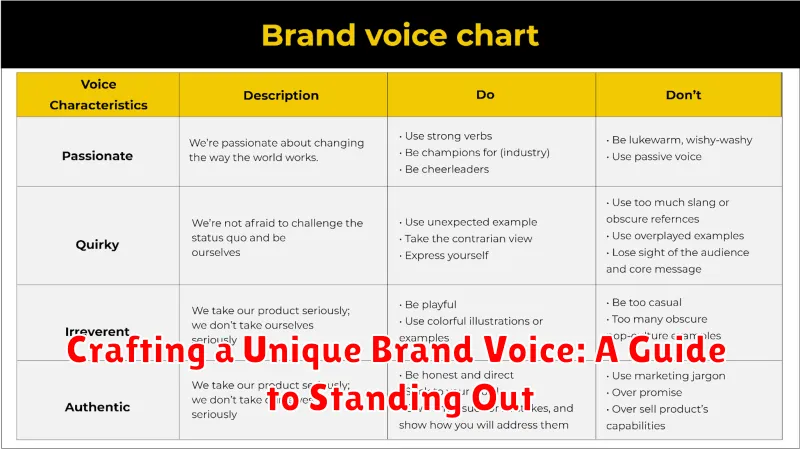
Your brand voice guidelines should clearly outline the tone, language, and personality you’ve chosen. Provide specific examples of how these elements translate into written and spoken communication. Include examples of do’s and don’ts to further clarify acceptable and unacceptable language.
Consider including a vocabulary section that lists preferred terms and phrases, as well as words to avoid. This helps maintain a consistent lexicon throughout your brand’s messaging.
Finally, regularly review and update your brand voice guidelines as your brand evolves and your target audience changes. This ensures your brand voice remains relevant and effective.
Implementing Your Brand Voice Across All Platforms
Once you’ve defined your brand voice, consistent implementation is key. This ensures a unified brand experience for your customers, regardless of how they interact with your brand. Consider these key areas:
Website and Content Marketing
Your website copy, blog posts, articles, and other content should reflect your brand voice. Ensure all written content adheres to your established guidelines for tone, language, and personality.
Social Media
Social media platforms offer a unique opportunity to engage with your audience. Adapt your brand voice to suit each platform while maintaining its core elements. For example, a more informal tone might be suitable for Twitter, while LinkedIn might require a more professional approach.
Customer Service
Train your customer service team to embody your brand voice in all interactions. Whether through email, phone, or live chat, ensure they communicate with customers using the appropriate tone and language.
Marketing Materials
From brochures and advertisements to email campaigns and presentations, ensure all marketing materials reflect your brand voice. Consistency across these channels reinforces your brand identity.
Internal Communications
While often overlooked, internal communications should also reflect your brand voice. This fosters a strong company culture and ensures everyone within the organization understands and represents the brand effectively.
Examples of Successful Brand Voices

Examining established brands can provide valuable insights into effective brand voice implementation. Consider the following examples:
Dove: Dove cultivates a voice of empowerment and body positivity. Their messaging consistently focuses on self-acceptance and challenging traditional beauty standards, resonating deeply with their target audience.
Nike: Nike’s brand voice is motivational and aspirational. They employ action-oriented language and powerful imagery to inspire athletes of all levels to push their limits and achieve their goals.
Mailchimp: Mailchimp’s brand voice is known for its playful yet helpful tone. They balance professionalism with a touch of quirkiness, making their marketing materials engaging and approachable.
Analyzing these examples reveals how a distinct brand voice contributes to brand recognition and customer loyalty. Note how each brand’s voice aligns perfectly with their target audience and overall brand identity.
Measuring the Impact of Your Brand Voice
Measuring the effectiveness of your brand voice is crucial for continuous improvement and ensuring it resonates with your target audience. While some aspects are qualitative, others can be quantitatively measured. Tracking these metrics provides valuable insights into how your brand voice contributes to overall business objectives.
Key Performance Indicators (KPIs) can include:
- Social Media Engagement: Monitor metrics like shares, comments, and likes to gauge audience response to your content and messaging.
- Website Analytics: Analyze bounce rate, time on page, and conversion rates to understand how your brand voice impacts user behavior on your website.
- Customer Feedback: Surveys, reviews, and customer service interactions provide valuable qualitative data on brand perception.
- Brand Sentiment Analysis: Utilize tools to track mentions of your brand across social media and online platforms to assess the overall sentiment associated with your brand voice.
By consistently monitoring these metrics, you can identify areas for refinement and ensure your brand voice remains effective and aligned with your business goals.
Evolving Your Brand Voice Over Time

Just like any living entity, your brand voice shouldn’t remain static. As your business grows and the market shifts, your brand voice needs to adapt to stay relevant and resonate with your evolving target audience. This doesn’t mean completely abandoning your core brand identity, but rather refining and adjusting it to reflect changes in your industry, customer base, and overall brand strategy.
Regularly audit your brand voice to ensure it aligns with your current business goals and market trends. Analyze customer feedback and social media interactions to understand how your audience perceives your voice. Are they connecting with it? Is it effectively communicating your brand’s values?
Subtle shifts can make a significant difference. Perhaps your target audience has become more informal, necessitating a slightly more relaxed tone. Or maybe your brand is expanding into a new market segment requiring adjustments in language or personality. These gradual evolutions will ensure your brand voice remains authentic and impactful without losing its core identity.
