

In today’s digital landscape, content is king. But simply creating content isn’t enough. To achieve data-driven success, businesses must prioritize measuring content performance. This involves tracking key metrics to understand what resonates with your audience, what drives conversions, and ultimately, what contributes to your bottom line. This guide, “Unlocking Insights: A Guide to Measuring Content Performance for Data-Driven Success,” provides a comprehensive framework for evaluating your content strategy and optimizing it for maximum impact. Learn how to effectively leverage content performance measurement to gain valuable insights and make informed decisions.
Unlocking insights through effective content performance measurement is crucial for any organization seeking to thrive in the competitive digital world. By understanding how your audience interacts with your content, you can refine your strategy, personalize user experiences, and drive measurable results. This guide explores the essential metrics, tools, and techniques for measuring content performance, empowering you to achieve data-driven success and maximize your return on investment. From website analytics to social media engagement, we will delve into the key elements of content performance measurement, offering practical advice for achieving your business objectives.
Defining Your Content Marketing Goals and Objectives
Before diving into metrics, it’s crucial to establish clear content marketing goals and objectives. These will serve as your guiding principles and inform the KPIs you choose to track. Without defined objectives, measuring performance becomes a meaningless exercise.
Start by identifying your overall marketing goals. Are you aiming to increase brand awareness, generate leads, drive sales, or improve customer retention? Your content marketing strategy should directly support these broader objectives.
Once you’ve established your overarching goals, translate them into specific, measurable, achievable, relevant, and time-bound (SMART) content marketing objectives. For example, instead of simply aiming to “increase brand awareness,” a SMART objective might be to “increase website traffic by 20% in the next quarter through organic search.”
Consider different types of objectives. These could include raising brand awareness, generating leads, driving conversions, improving customer engagement, building community, or educating your audience.
Key Performance Indicators (KPIs) for Content Measurement
Selecting the right Key Performance Indicators (KPIs) is crucial for accurately measuring content effectiveness. These metrics provide quantifiable data that demonstrate how well your content is performing against your defined objectives. Choosing KPIs relevant to your goals ensures you’re focusing on the data that truly matters.
Website Traffic metrics like unique visitors, page views, and bounce rate offer insights into content reach and engagement. A high bounce rate, for instance, may suggest content isn’t resonating with your target audience.
Engagement Metrics such as time on page, social shares, and comments indicate audience interest and interaction. These KPIs reveal how compelling and shareable your content is.
Lead Generation metrics track how effectively content contributes to acquiring potential customers. This might include form submissions, email sign-ups, or content downloads.
Sales Conversions directly measure how content influences purchasing decisions. Tracking conversions helps demonstrate the ROI of content marketing efforts.
Tools and Techniques for Tracking Content Performance
Effectively tracking content performance requires leveraging the right tools and techniques. Website analytics platforms like Google Analytics are essential for monitoring metrics such as website traffic, bounce rate, time on page, and conversion rates. These platforms provide a comprehensive overview of how users interact with your content.
Social media analytics tools offer insights into engagement, reach, and audience demographics on various social platforms. Tracking metrics like shares, likes, and comments helps gauge audience response to your social content.
Marketing automation platforms can streamline data collection and analysis by integrating data from multiple sources. These platforms often include features for A/B testing and personalized content delivery, enabling data-driven optimization.
Beyond platform-specific tools, employing techniques like UTM parameters allows for granular tracking of campaign performance across different channels. Using UTM parameters provides valuable data on which sources are driving the most effective traffic to your content.
Analyzing Data to Understand Audience Behavior
Analyzing collected data is crucial for understanding audience behavior and preferences. This involves going beyond simply viewing metrics and delving into the “why” behind the numbers. Identifying patterns and trends in your data helps uncover what resonates with your target audience.
For example, if a particular blog post receives significantly more engagement than others, analyze its content, style, and promotion strategy. Was it shared more on social media? Did it target specific keywords? These insights can inform future content creation.
Segmenting your audience based on demographics, interests, or engagement levels allows for more personalized content delivery. This targeted approach can significantly improve content effectiveness and drive better results. Understanding how different audience segments interact with your content enables you to tailor messaging and distribution channels more effectively.
Optimizing Content Based on Performance Insights
Data analysis reveals valuable insights into content effectiveness, enabling strategic optimization for improved results. By examining which pieces resonate most with your audience, you can tailor future content to their preferences.
High-performing content provides a blueprint for success. Analyze its characteristics – topic, format, style, and distribution channels – to replicate and amplify positive outcomes. Conversely, underperforming content highlights areas for improvement. Was the topic irrelevant, the format unengaging, or the promotion inadequate? Addressing these weaknesses refines your content strategy.
A/B testing allows for iterative refinement. Experiment with different headlines, visuals, and calls to action to determine which versions yield the best results. Continuously analyzing and adapting based on performance data ensures your content remains relevant, engaging, and effective in achieving your marketing objectives.
Measuring the ROI of Your Content Marketing Efforts
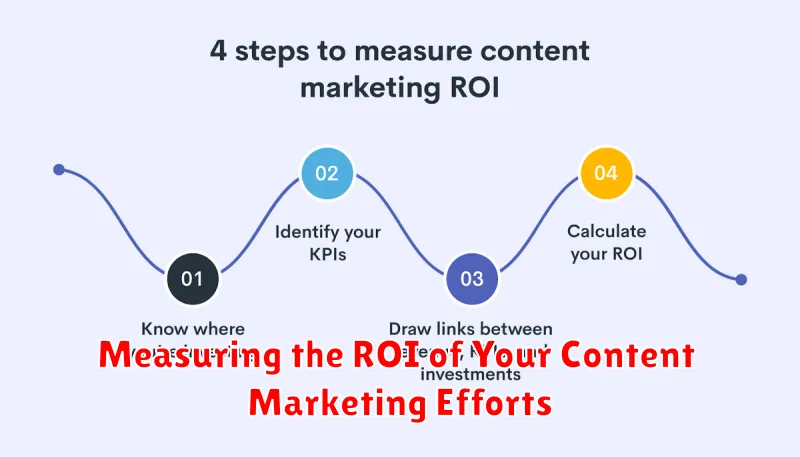
Demonstrating the value of content marketing requires a clear understanding of its return on investment (ROI). While not always straightforward, measuring content ROI is crucial for justifying budget allocation and proving the effectiveness of your strategy. This involves connecting content performance to tangible business outcomes.
A fundamental approach is to assign monetary values to key conversions influenced by your content. For example, if a blog post leads to a certain number of product demo requests, and historically a percentage of those demos convert into paying customers, you can calculate the ROI of that blog post. Calculate the total revenue generated by these conversions and subtract your content marketing costs to determine the net ROI.
Other relevant metrics to consider include:
- Lead generation: Track how many leads are generated through content efforts.
- Sales conversions: Measure how content contributes to closing deals.
- Customer lifetime value (CLTV): Analyze how content influences long-term customer relationships.
By consistently measuring and analyzing these metrics, you gain valuable insights into which content pieces contribute most significantly to revenue generation and business growth, enabling data-driven decisions for future content strategies.
Reporting and Communicating Your Content Performance Results
Effective communication of your content performance is crucial for demonstrating the value of your content marketing efforts and securing buy-in for future initiatives. Clarity and conciseness are key when presenting data insights.
Tailor your reports to your audience. Executives may be primarily interested in high-level metrics like return on investment (ROI) and overall content impact on business goals, while marketing teams will require more granular data on individual content pieces and campaign performance.
Use visualizations such as charts and graphs to make data more digestible and easier to understand. Clearly label all data points and provide context for any fluctuations or trends.
Regular reporting is essential for ongoing optimization. Establish a consistent reporting schedule, whether weekly, monthly, or quarterly, to track progress and identify areas for improvement.
Finally, focus on actionable insights. Don’t just present data; explain what it means and how it can be used to improve future content strategy and drive better results.
Staying Up-to-Date with the Latest Content Measurement Trends
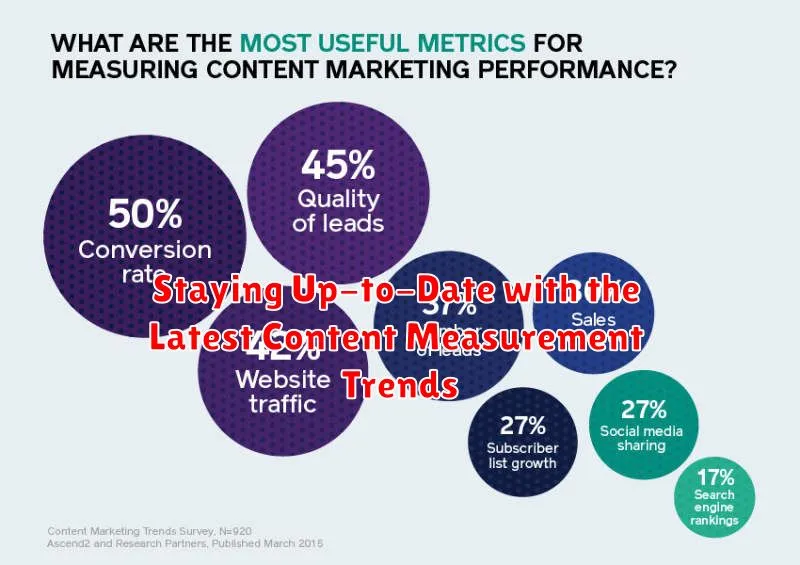
The digital landscape is constantly evolving, and so are the methods for measuring content performance. Staying informed about the latest trends is crucial for maintaining an effective content strategy. Continuous learning is key to adapting and refining your approach.
Artificial intelligence (AI) and machine learning (ML) are increasingly playing a role in content analysis, providing deeper insights into audience behavior and predictive capabilities. Staying abreast of these advancements can give you a competitive edge.
Privacy changes and regulations, like the deprecation of third-party cookies, are impacting data collection and measurement. Understanding these changes and exploring alternative tracking methods, such as first-party data strategies, is essential.
The rise of new platforms and content formats requires staying flexible and exploring new measurement approaches. For example, the growing popularity of short-form video necessitates understanding metrics specific to those platforms.
