

In the realm of digital marketing, understanding key metrics is paramount to success. One such crucial metric is Click-Through Rate (CTR). This comprehensive guide is designed to provide beginners with a thorough understanding of CTR, its significance, and how to effectively utilize it to optimize online campaigns. Whether you’re involved in search engine optimization (SEO), pay-per-click (PPC) advertising, or email marketing, grasping the intricacies of CTR is essential for improving your online performance and achieving your marketing goals.
This beginner-friendly guide will delve into the definition of Click-Through Rate, explaining how it’s calculated and why it’s such a vital metric. We will explore the various factors that influence CTR, including ad placement, keyword relevance, and compelling ad copy. By the end of this guide, you’ll have a solid foundation in understanding Click-Through Rate and be equipped to leverage this knowledge to enhance your online marketing strategies and drive better results. This comprehensive resource will provide you with practical tips and insights to improve your CTR across different platforms and campaigns.
What is Click-Through Rate (CTR)?
Click-through rate (CTR) is a key metric in digital marketing that measures the performance of online advertisements, links, or calls to action. It represents the percentage of people who see your ad or link and actually click on it.
Think of it this way: if 100 people see your ad and 5 of them click on it, your CTR is 5%.
CTR provides valuable insight into how effectively your content or ad is engaging your target audience. A high CTR generally indicates a compelling message and effective targeting, while a low CTR suggests potential areas for improvement.
Why is CTR Important?
Click-through rate (CTR) is a key performance indicator (KPI) for several reasons. It provides valuable insights into the effectiveness of your online marketing campaigns and overall digital presence. A high CTR generally indicates successful campaigns resonating with your target audience.
Campaign Performance Evaluation: CTR helps gauge the success of your ad campaigns, email marketing efforts, and even website design. A low CTR can signify a need for improvement in targeting, ad copy, or call-to-action.
Website Optimization: For websites, CTR helps understand how well your content is performing in search engine results pages (SERPs). High CTR from organic search results suggests your website is effectively attracting users interested in your content.
Return on Investment (ROI): By optimizing for CTR, you can potentially drive more traffic to your website or landing pages, ultimately leading to increased conversions and a better return on investment.
Keyword Effectiveness: In pay-per-click (PPC) advertising, CTR plays a crucial role in determining Quality Score. Higher CTR can lead to lower costs and better ad placement.
How to Calculate CTR
Calculating click-through rate is a straightforward process. The formula involves dividing the number of clicks your ad or link received by the number of times it was shown (impressions), then multiplying by 100 to express the result as a percentage.
Here’s the formula: CTR = (Clicks / Impressions) * 100
For example, if your ad received 50 clicks and was shown 1,000 times, your CTR would be 5%.
Let’s break it down further:
- Clicks: This is the total number of times users clicked on your ad or link.
- Impressions: This refers to the number of times your ad or link was displayed, regardless of whether it was clicked.
By consistently monitoring and calculating your CTR, you can gain valuable insights into the effectiveness of your online campaigns and make data-driven adjustments to improve performance.
Factors Affecting CTR
Several factors influence click-through rates, making it a complex metric to analyze. Understanding these factors can help in optimizing campaigns for better performance.
Relevance
Relevance plays a crucial role. If your ad or content isn’t relevant to the user’s search query or interests, they are less likely to click. Ensuring a strong connection between user intent and your offering is paramount.
Position
Position, especially in search engine results pages (SERPs), heavily influences CTR. Higher positions generally receive more clicks due to increased visibility.
Ad Copy and Formatting
Compelling ad copy and clear formatting contribute significantly to CTR. Strong calls to action, appealing visuals (when applicable), and concise messaging can entice clicks.
Targeting
Effective targeting ensures your message reaches the right audience. The more specific your targeting, the higher the likelihood of capturing interested users.
Device
User device can also affect CTR. Mobile users, for instance, may exhibit different clicking behavior than desktop users due to screen size and usage context.
Improving Your CTR: Best Practices
Optimizing your click-through rate requires a strategic approach. Here are some best practices to consider:
A/B Testing
A/B testing is crucial. Experiment with different versions of your ad copy, headlines, and calls to action. Track the performance of each version to determine which resonates most effectively with your target audience. This iterative process allows you to refine your approach over time.
Target Audience
Understanding your target audience is paramount. Tailor your message to their specific needs and interests. The more relevant your ad is to the viewer, the more likely they are to click.
Keywords
Use relevant keywords. Conduct thorough keyword research to identify the terms your target audience is using. Incorporate these keywords into your ad copy and headlines to improve visibility and relevance in search results.
Ad Placement
Consider ad placement carefully. Where your ad appears can significantly impact its visibility and click-through rate. Experiment with different placements to find the optimal position for your target audience.
Common Mistakes to Avoid
Several common mistakes can negatively impact your CTR. Avoiding these pitfalls is crucial for maximizing the effectiveness of your campaigns.
Ignoring Keyword Relevance
Using keywords that aren’t relevant to your target audience or landing page content can lead to a low CTR. Ensure strong keyword relevance throughout your campaigns.
Poorly Written Ad Copy
Uncompelling ad copy fails to grab attention and entice clicks. Focus on crafting concise, engaging, and action-oriented ad copy that highlights unique selling propositions.
Neglecting A/B Testing
Failing to A/B test different ad variations prevents you from identifying what resonates best with your audience. Regularly test different headlines, descriptions, and calls to action to optimize for higher CTR.
Disregarding Mobile Optimization
With a significant portion of internet traffic coming from mobile devices, neglecting mobile optimization is a critical error. Ensure your ads and landing pages are mobile-friendly for a seamless user experience.
Tools for Measuring CTR

Several tools are available to effectively measure and track click-through rates. Choosing the right tool depends on your specific needs and the platforms you’re using.
For website analytics, Google Analytics is a popular and powerful choice. It provides comprehensive CTR data for organic search, paid campaigns, and other traffic sources. You can segment data to analyze CTR for specific pages, keywords, and demographics.
Google Search Console complements Google Analytics by focusing on your website’s performance in organic search results. It provides data on clicks, impressions, and average CTR for different search queries.
If you run paid advertising campaigns, platform-specific tools are essential. Google Ads provides detailed CTR data for your pay-per-click (PPC) campaigns. Similarly, social media advertising platforms like Facebook Ads Manager and Twitter Analytics offer built-in CTR tracking capabilities.
CTR Benchmarks by Industry
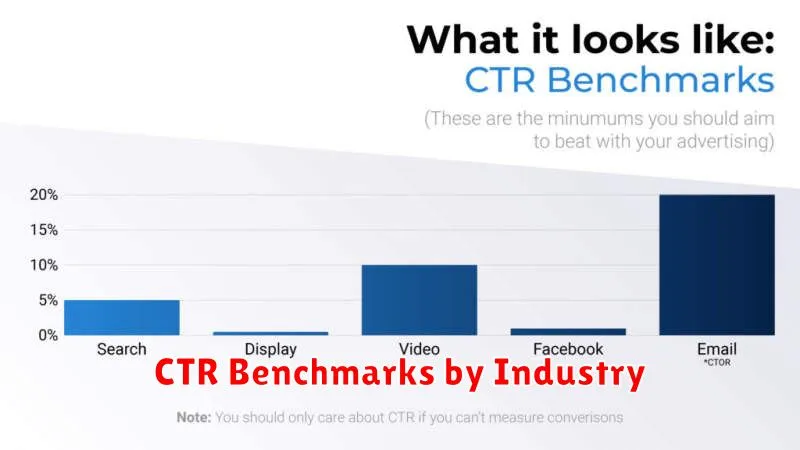
Understanding average click-through rates for your specific industry can provide valuable context for evaluating your own performance. Benchmarking allows you to see how your CTR stacks up against competitors and identify areas for potential improvement. Keep in mind that these benchmarks are averages and can vary significantly based on factors like ad platform, campaign type, and targeting.
Below is a table showcasing some example CTR benchmarks. Remember that this data is illustrative and shouldn’t be taken as definitive. Always consult up-to-date industry reports for the most accurate information.
| Industry | Average CTR (Example) |
|---|---|
| E-commerce | 2.1% |
| B2B | 1.5% |
| Technology | 1.8% |
| Travel | 2.4% |
It’s crucial to research your specific niche within your industry. For example, within e-commerce, clothing retailers might have different average CTRs compared to electronics retailers. Using granular data relevant to your specific area will provide more meaningful insights.
